
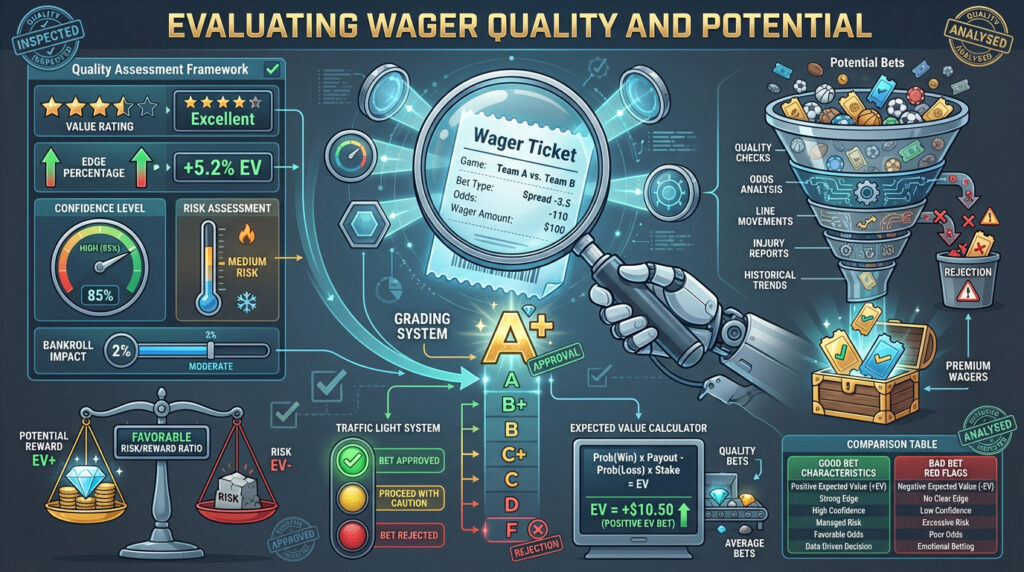
What Makes a Good Bet? Analyzing Risk Vs Reward in Detail
When evaluating the quality of a bet, it is essential to carefully assess the interplay between risk and reward. The foundation of a good bet lies in a thorough examination of factors such as probability, potential outcomes, and expected value. By engaging in a detailed analysis of these components, individuals can approach betting with a strategic and informed perspective.
Ultimately, the determination of whether a bet is deemed ‘good’ hinges on a nuanced consideration of the balance between risk and potential rewards, which plays a crucial role in shaping one’s betting decisions.
Understanding Risk and Reward
When considering risk versus reward, it’s essential to grasp the correlation between the two. Risk denotes the possibility of experiencing loss or harm, while reward signifies the benefit or profit that can be gained. This understanding is crucial for making well-informed decisions, whether in financial investments, entrepreneurial endeavors, or personal choices.
By assessing the potential risks involved, individuals can determine if the anticipated rewards justify the potential losses. It’s vital to gauge one’s risk tolerance and align it with the expected rewards. Achieving a balance between risk and reward necessitates a methodical approach, where the possible outcomes are carefully weighed against the probability of success.
This comprehension serves as the basis for making strategic and calculated choices.
Assessing Probability and Potential Outcomes
When analyzing probability and potential outcomes, it’s important to consider the likelihood of various scenarios and their associated results. By assessing the probability of each potential outcome, one can better understand the risks and rewards involved. Factors influencing the outcome should be carefully examined, and probabilities assigned based on a thorough analysis. This approach enables decision-makers to weigh the probability of success against potential gains or losses, leading to more informed choices.
Evaluating the probability of different outcomes helps in making strategic decisions that aim to maximize success while minimizing risks. A comprehensive assessment of probability and potential outcomes is crucial for making well-informed and calculated decisions.
Calculating Expected Value
Understanding how to calculate expected value is a fundamental aspect of assessing risk and reward in decision-making, particularly in betting scenarios. Expected value is a key metric used to evaluate the potential outcomes of a bet. It involves multiplying the probability of each possible outcome by the associated payoff, then summing these values.
For example, if there’s a 50% chance of winning $100 and a 50% chance of losing $50, the expected value would be (0.5 $100) + (0.5 -$50) = $25. A positive expected value signifies a potentially profitable bet, while a negative value indicates a likely loss. Seeking out bets with positive expected values consistently can enhance the prospects of long-term success in betting.
Identifying Favorable Betting Opportunities
Understanding how to identify favorable betting opportunities is essential for successful betting strategies. By analyzing the potential risks and rewards of each bet carefully, you can increase your chances of making profitable decisions. Look for bets where the odds are in your favor, indicating a higher potential payout compared to the risk involved. Factors such as historical data, expert opinions, and relevant news should be considered when assessing a bet’s likelihood of success.
It is crucial to compare your own assessment with the odds offered by bookmakers. Discrepancies between the two can present valuable opportunities for profitable bets.
Strategies for Successful Betting
Implementing effective strategies is essential for success in betting. Begin by setting clear goals and establishing a budget for your bets. Conduct thorough research and analysis on the teams or players you’re betting on to make well-informed decisions. Utilize various betting strategies like spread betting, moneyline betting, or prop betting to diversify your options.
Keep a record of your bets and analyze your wins and losses to identify trends and enhance your future bets. Practice discipline by avoiding chasing losses and knowing when to stop. Consider implementing a staking plan to manage your bankroll efficiently. Remember, successful betting requires a blend of skill, knowledge, and a strategic approach.
Conclusion
In summary, effectively making a bet involves a meticulous evaluation of the risks and rewards, a precise assessment of probabilities, the calculation of expected value, and the identification of advantageous opportunities. By adopting a methodical approach and conducting comprehensive research, individuals can enhance their likelihood of success in betting. It is crucial to always consider both the potential profits and losses before placing a bet to optimize the profit potential. Wishing you success in your betting endeavors and may the odds work in your favor.